JDSU
Finisar – FY09 Revenue Outlook
Finisar’s Q408 Earnings Call was June 12. Since then the stock has declined nearly 25%, reflecting what we believe is a general dissatisfaction with revenue growth guidance of 10-15%. This guidance appears conservative.
Optical Component Consolidation – Part I
Just as the market abandoned hope of consolidation it strikes. The dust has settled from the merger announcement between Finisar and Optium and in plain terms it is a brilliant move. Finisar is already a leader in the industry but this puts them in an even stronger position than before. This series of posts looks at why it is happening, who benefits, who loses, and suggests what is likely to happen next.
Infinera – The Optical Component Company That Wasn’t
 Infinera (INFN) had a very successful first day of trading after seven years of working counter to the popular and misguided beliefs of a Gilderesque all optical future.
Great controversy surrounds the company and investors wonder whether the valuation attached to company is justifiable. The valuation is indeed debatable and is predicated on their success penetrating the PTTs & Bellcos.
Five Misconceptions About the 10G Optical Market
 I’ve noticed a common trend during conversations with investors and analysts about the state of the optics market. People seem to be staking their hopes on 10G as the growth driver for the industry. I firmly believe this is true, but people are assuming the gains will be evenly distributed among all players. Here are the common misconceptions:
Cornering the Commodity Market
The most under-reported but most significant announcement at OFC2007 was Finisar’s (FNSR) Fiber to the Home (FTTH) product. Most optical vendors are communicating their intent to NOT make a product for FTTH or Passive Optical Networking (PON) applications. When the worlds highest volume optical module supplier decides to go the opposite way, something noteworthy just happened.
Finisar FQ307 Earnings Commentary
Finisar (FNSR) reported revenue Monday evening of $107.5M. No written transcript of the call is available, though a replay is and the company overview was updated. I thought there were three notable announcements.
Why JDSU Bought Picolight
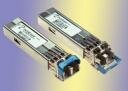 JDSU (JDSU) announced that they are acquiring Picolight, a maker of VCSEL based optical transceivers. This is yet another example of healthy consolidation in the optical components business, which ultimately will lead to a better business environment for all- except for the customers like Cisco that exploit the oversupply situation. And Cisco is the likely reason JDSU bought Picolight in the first place.
Death of the All Optical Network – Gilder Telecosm 2006

Infinera took the bold and stunning risk of angering the Gilder priesthood by illustrating that an all optical network was not the future and not the best solution.
Finisar & Luxtera – Gilder Telecosm 2006
The Gilder Telecosm 2006 conference is punctuated by sponsor company presentations. This session had the CEOs of Luxtera and Finisar (FNSR) presenting, followed by moderator and audience Q&A. I was really looking forward to this discussion given the work I’ve done on SFP’s and Cisco.
What’s Going On in Optical
OK, since I’ve been called out by Om Malik, I’m going to let rip with a stream-of-conciousness monologue on optical. No backspace key, no delete key, spelling corrections ex-post-facto. Here goes.

